
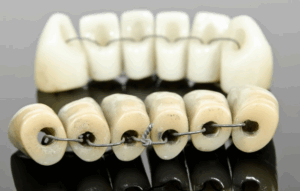
Today, dentures are typically made out of comfortable ceramics, acrylics, or resins, and can be precisely fitted to fit the unique shape of your smile. But have you ever wondered what they must’ve been like before the invention of modern materials and X-rays? People had to be creative, to be sure! If you rewind the clock and look at various types of dentures from the past, you’ll see just how much they’ve improved to benefit patients like you.
Real Teeth and Gold Wire
The earliest records of dentures that archeologists have found date back to several millennia ago, when the Etruscans were still the primary inhabitants of Italy. Dentures in “the boot” of the Mediterranean seemed to have been made by fastening several animal or human teeth together with a metal wire. The Egyptians of that time preferred wolf teeth in particular, while the Mayans used stones and seashells.
Though these ancient dentures no doubt had a cosmetic appeal, they lacked stability and likely had limited function.
Introducing Porcelain
Porcelain was actually invented a lot earlier than you might think. A British physician is credited with creating the first porcelain dentures in 1774. Since porcelain is still a popular material for dental cosmetics and some restorations, it would be fair to assume that these dentures were much better than previous versions. While this is technically true, the porcelain widely used in 1774 was very different from what dentists use now. It chipped easily, and looked unnaturally white next to a patient’s original teeth.
Morbid Materials of Choice
You can always trust the 1800’s to make things more…interesting. As war consumed Europe, it became fashionable for the social elite to wear dentures made from the pearly whites of deceased soldiers. So many teeth were stripped from the Battle of Waterloo that they became known as “Waterloo teeth.” Other popular sources included teeth extracted from condemned criminals and poor citizens.
Not every change made to dentures in the 1800’s was morbid, fortunately. This is when special springs and swivels were introduced to provide more flexible movement and natural function, and hardened rubber was used as a cost-effective base.
More Modern Improvements
By the 20th century, acrylic resin would replace hard rubber for the base of dentures, and are also the most common choice for the prosthetic teeth (though porcelain has been refined enough that it’s also a good option!).
Thanks to the near-constant improvement of imaging devices like X-rays and the widespread use of impressions, modern dentures not only look good, but they feel good, too. If you visit your dentist for tooth replacement today, they could even recommend enhancing your dentures with dental implants, which provide superior strength and stability.
Dentures have come a long way over the years, and rest assured – they’re better than ever!
About the Practice
Our dedicated team of dentists at Beverly Farms Dental keep up with the latest technological trends in dentistry. We can provide you with a stunning set of full or partial dentures that will seamlessly complement your smile aesthetics. Or, if you’d prefer, we can combine your denture with dental implants so you can experience the best that modern dentistry has to offer. To find your perfect tooth replacement solution, contact our office at 978-927-3515 and book your appointment today!